Tecnologías Disruptivas e Inteligencia Artificial: Cíborg, Virtualidad y Currículo en Artes y Diseño
Disruptive Technologies and Artificial Intelligence: Cyborg, Virtuality and Curriculum in Arts and Design
Keywords:
Tecnologías disruptivas, Inteligencia artificial, Educación superior, Ciborg, Virtualidad, Currículo en artes y diseñoAbstract
Las tecnologías disruptivas han comenzado a reconfigurar los currículos de artes y diseño en un contexto de virtualidad, facilitando nuevas formas de enseñanza y aprendizaje que van más allá de las metodologías tradicionales. Estas innovaciones, que incluyen inteligencia artificial y realidad aumentada, no solo han modificado las formas en que se crea y experimenta el mundo, sino que también han permitido explorar a través de múltiples herramientas la expansión de la creatividad y la representación visual de manera dinámica.
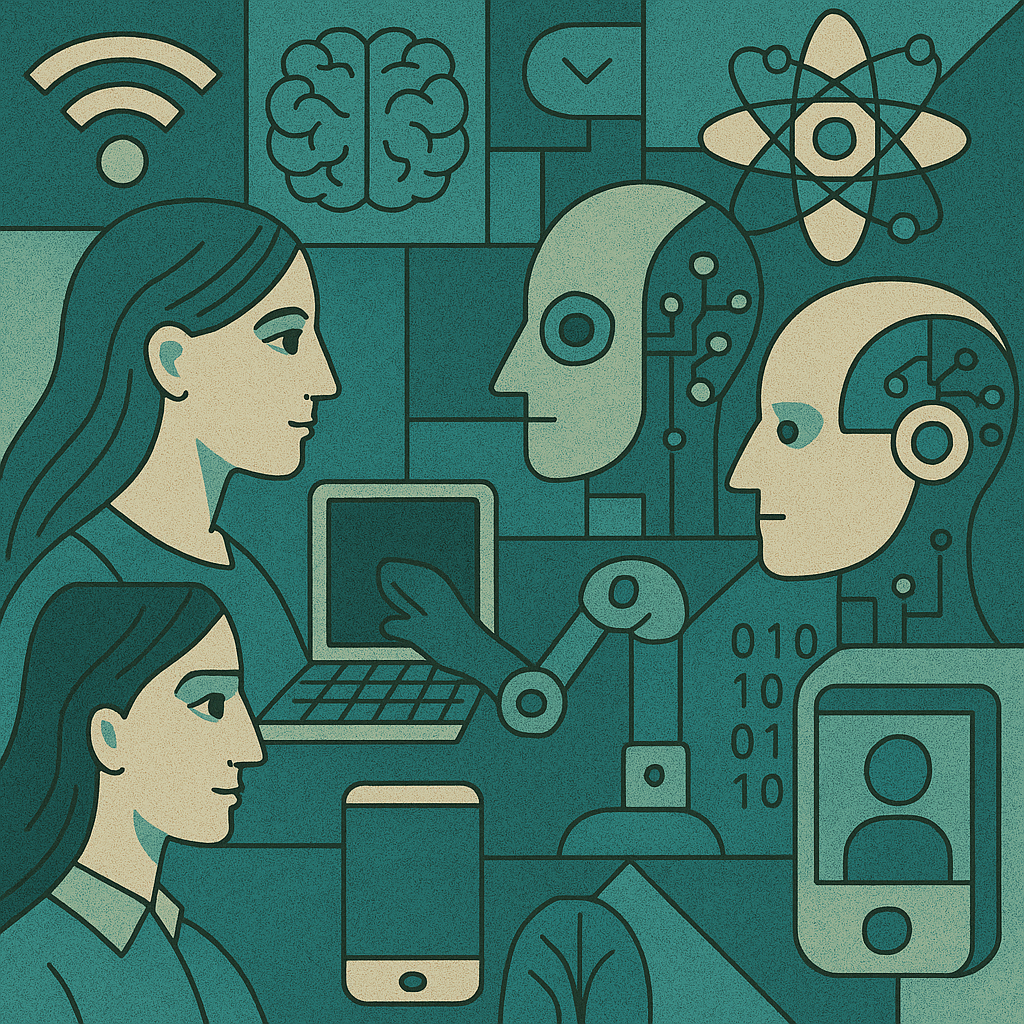
El concepto de cíborg, que amalgama lo humano con lo tecnológico, se presenta como un fenómeno inclusivo en la era de la inteligencia artificial (IA). Este enfoque redefine las fronteras de la identidad y la capacidad humana, permitiendo a personas con discapacidades o limitaciones acceder a nuevas oportunidades. La integración de la IA en la vida cotidiana abre vías para la autoexpresión y conexión, fortaleciendo el tejido social y comunitario. A pesar de las potencialidades que presentan, el acceso desigual a las tecnologías digitales genera una brecha educativa significativa.
En este escenario, se hace imperativo repensar el currículo de artes y diseño para garantizar que sea inclusivo y relevante. Autores como Magendzo (2020) y Scolari (2019) plantean la necesidad de diseñar núcleos temáticos que conecten los saberes con la realidad contemporánea, dado que en este proceso se entrelazan intereses, tendencias y posturas críticas, pedagógicas e ideológicas, así como actores que participan del proceso curricular, y, por lo tanto, debe concebirse como un proceso interactivo y bidireccional que enriquezca la experiencia humana.
Palabras clave: Tecnologías disruptivas, inteligencia artificial, educación superior, cíborg, virtualidad, currículo en artes y diseño.
Abstract
Disruptive technologies have begun to reconfigure arts and design curricula in a context of virtuality, facilitating new forms of teaching and learning that go beyond traditional methodologies. These innovations, which include artificial intelligence and augmented reality, have not only modified the ways in which the world is created and experienced, but have also allowed the expansion of creativity and visual representation to be explored dynamically through multiple tools.
The concept of the cyborg, which amalgamates the human with the technological, is presented as an inclusive phenomenon in the age of artificial intelligence (AI). This approach redefines the boundaries of human identity and capability, allowing people with disabilities or limitations to access new opportunities. The integration of AI into everyday life opens avenues for self-expression and connection, strengthening the social and community fabric. Despite their potential, unequal access to digital technologies generates a significant educational gap.
In this scenario, it is imperative to rethink the arts and design curriculum to ensure that it is inclusive and relevant. Authors such as Magendzo (2020) and Scolari (2019) propose the need to design thematic cores that connect knowledge with contemporary reality, given that in this process interests, trends and critical, pedagogical and ideological positions are intertwined, as well as actors who participate in the curricular process, and, therefore, it should be conceived as an interactive and bidirectional process that enriches the human experience.
Keywords: Disruptive technologies, artificial intelligence, higher education, cyborg, virtuality, arts and design curriculum.